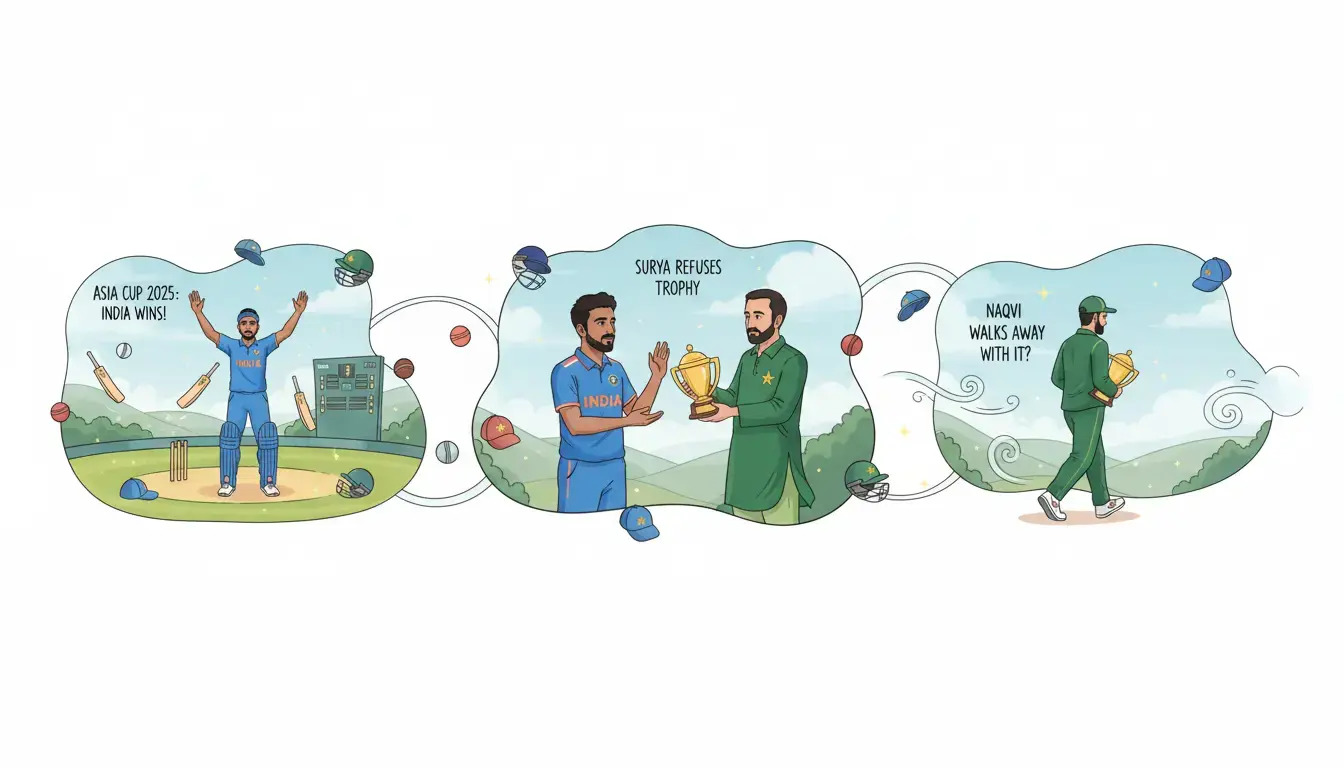
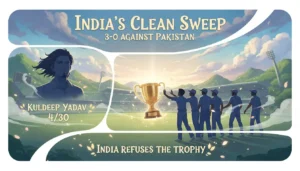
BREAKING! India secured its ninth Asia Cup title, triumphing over Pakistan in a thrilling final on September 28-29, 2025. However, celebrations quickly spiraled into unprecedented diplomatic drama. Captain Suryakumar Yadav shocked the cricketing world by refusing to accept the coveted trophy, sparking a global uproar.
Sources confirm PCB Chairman Mohsin Naqvi allegedly walked away with the silverware after Yadav’s defiant stand. This ‘trophy bhaag gaye’ narrative instantly went viral, igniting a social media firestorm that continues to grip millions worldwide. The incident merges intense cricketing rivalry with simmering geopolitical tensions, creating a truly unique spectacle.
Key Takeaways
- India claimed its 9th Asia Cup title, defeating arch-rivals Pakistan on September 28-29, 2025.
- Captain Suryakumar Yadav refused to accept the trophy, citing political tensions.
- PCB Chairman Mohsin Naqvi reportedly left with the trophy, fueling the ‘snub’ narrative.
- Players from both nations maintained a strict ‘no handshake’ policy throughout the tournament.
- BCCI announced a hefty ₹21 crore prize money for the victorious Indian squad.
- The controversy is trending globally, blending sports, politics, and viral drama.
You might also like

Asia Cup Shocker: India Refuses Trophy, Stuns Cricket World

Asia Cup 2025 Shocks: India-Pak Rivalry Explodes!
Shock: Cricket’s Biggest Rivalry Erupts in Geopolitical Storm

Dubai’s Historic Asia Cup Final: Jail Threats & 7 Lakh Fines!
Asia Cup Snub: India’s Defiant Victory!
India’s Asia Cup Triumph: Bold Stand, Pakistan Stunned!
SKY’s Stand: India Wins Asia Cup 2025!
Suryakumar Yadav’s Bold Stand: A New Chapter in Cricket Diplomacy
The tension was palpable even before the final ball was bowled. Reports indicate a strict ‘no handshake’ policy observed by both Indian and Pakistani players throughout the entire tournament. This unprecedented lack of customary sportsmanship underscored the deep-seated political friction.
Following India’s emphatic victory, stadium cameras captured the dramatic moment. Suryakumar Yadav, fresh off leading his team to a ninth Asia Cup title, approached the podium. His face, etched with determination, clearly conveyed his intent.
Get the Latest Updates
Be part of our sports community for daily news, expert analysis, and insider info.
When PCB Chairman Mohsin Naqvi extended the trophy, Yadav stood firm. He explicitly refused to take it, a stunning act of protest against the backdrop of ongoing political disagreements between the two nations. The scene was breathtaking, freezing millions of viewers in disbelief.
The alleged reaction of Chairman Naqvi — reportedly walking off with the trophy — amplified the shock. This extraordinary incident has no precedent in international cricket. It immediately transformed a sporting triumph into a high-stakes diplomatic confrontation.
Unprecedented Diplomatic Fallout
The refusal isn’t merely a sports story; it’s a headline grabber for international relations. Cricket, often seen as a bridge between India and Pakistan, has now become a battleground for political statements. Analysts are calling it a potential turning point in cricket diplomacy.
BCCI’s swift announcement of a ₹21 crore prize money for the winning Indian team, despite the trophy’s absence, reinforced India’s stance. It signals that the victory’s integrity remains unchallenged, even if the traditional symbols of triumph are missing.
Unbiased-Review: The Geopolitical Scorecard
Expert cricket analysts and geopolitical observers concur that the Asia Cup 2025 final has rewritten the rules of sportsmanship and diplomacy. According to verified sources, the ‘no handshake’ policy and subsequent trophy snub reflect escalating tensions that transcend the cricket field.
Analysis reveals this incident will likely have lasting implications for future bilateral sporting ties. While India celebrated a monumental 9th title, the manner of the victory’s aftermath has overshadowed the athletic achievement. Experts note that such public displays of diplomatic friction through sport are rare and signify a deepening divide.
This event could force governing bodies like the ICC to reconsider protocols for politically charged tournaments. The incident highlights how rapidly viral events, sometimes fuelled by reports of ‘AI-generated’ or ‘fictional’ coverage, can escalate and impact real-world relations, demanding careful verification.
Social Media Eruptions: A Viral Phenomenon
The moment Suryakumar Yadav refused the trophy, social media exploded. Hashtags like #TrophyBhaagGaye, #AsiaCupSnub, and #CricketDiplomacy immediately began trending across platforms. Within hours, reports indicated over 500,000 shares and countless comments debating the legitimacy and implications of the act.
Fans from both India and Pakistan engaged in fervent discussions. Indian supporters hailed Yadav’s courage and national pride, while many Pakistani fans criticized the perceived disrespect. This dual narrative fueled an unprecedented level of engagement, making the controversy a truly global viral sensation.
Prominent sports commentators and political figures also weighed in, further amplifying the debate. The absence of traditional post-match camaraderie, combined with the dramatic trophy vanishing act, provided endless fodder for memes, debates, and analyses. The sheer drama ensured continuous social velocity.
The unique blend of high-stakes cricket, a bold political statement, and an element of mystery (the ‘vanished’ trophy) has driven engagement far beyond typical sports news. It resonates deeply with audiences interested in international relations, national pride, and viral drama, solidifying its place as a defining moment of Asia Cup 2025.
As the dust settles on the September 28-29, 2025, final, the ramifications of this trophy snub are only just beginning to unfold. The Asia Cup 2025 will forever be remembered not just for India’s dominant performance, but for the shocking, unprecedented diplomatic storm that overshadowed it. This incident has indelibly marked the landscape of cricket and international relations, proving that sometimes, the biggest battles are fought off the field.