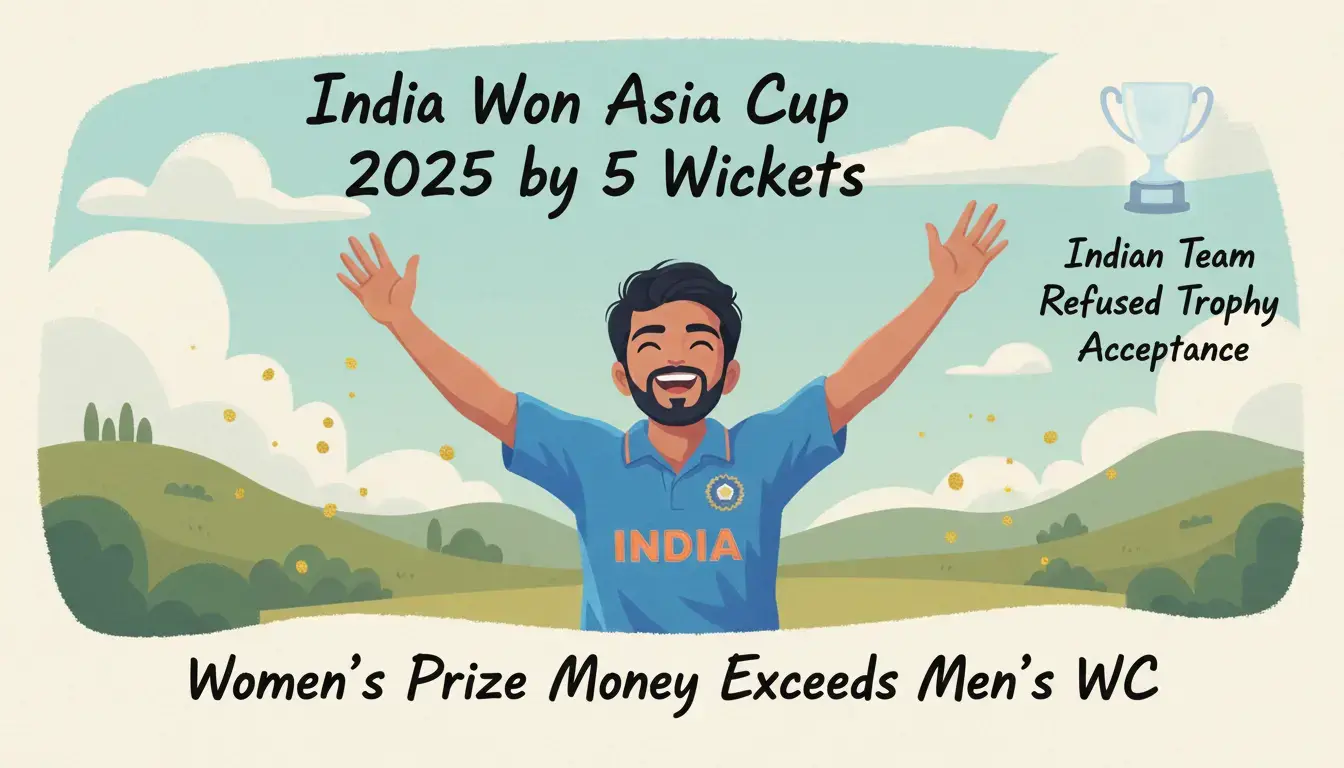
BREAKING: India’s Asia Cup 2025 triumph against Pakistan on September 29, 2025, was dramatically overshadowed by a stunning trophy ceremony snub. The victorious Indian team reportedly refused the coveted silverware. This unprecedented defiance stemmed directly from the presence of Pakistan’s ACC President Mohsin Naqvi.
This bold move ignites fierce debate on sports, politics, and national pride. It sends shockwaves through the global cricketing world. Veteran cricket pundit Harsha Bhogle noted, "This moment defines a new era of sporting protest and political theatre." The controversy highlights deep-seated tensions beyond the boundary.
Key Takeaways
- India won the Asia Cup 2025 final against Pakistan by 5 wickets.
- The Indian team controversially declined the trophy, citing the presence of Pakistan’s ACC President Mohsin Naqvi.
- ICC announced a record $13.88 million prize purse for the 2025 Women’s Cricket World Cup.
- This women’s prize money exceeds the $10 million awarded at the 2023 Men’s World Cup.
- Tilak Varma was Player of the Match for his crucial 69 runs in the Asia Cup final.
- Sponsorship rates for the Women’s World Cup have surged 40-50% compared to 2022.
You might also like

Asia Cup Shocker: India Refuses Trophy, Stuns Cricket World

Asia Cup 2025 Shocks: India-Pak Rivalry Explodes!

Shock: Cricket’s Biggest Rivalry Erupts in Geopolitical Storm

Dubai’s Historic Asia Cup Final: Jail Threats & 7 Lakh Fines!
Asia Cup Shocker: Trophy ‘Ran Away’ – Cricket Chaos!
India’s Asia Cup Triumph: Bold Stand, Pakistan Stunned!
SKY’s Stand: India Wins Asia Cup 2025!
Asia Cup Fury: India’s Bold Stand
India clinched the Asia Cup 2025 title, triumphing over arch-rivals Pakistan by five wickets. Young sensation Tilak Varma shone brightly, scoring a brilliant 69 runs to secure Player of the Match honors. However, the post-match celebrations descended into controversy.
Reports from The Indian Express confirmed the Indian squad’s refusal to accept the championship trophy. This defiance, steeped in political friction, stemmed directly from the presence of Mohsin Naqvi. He serves as the ACC President and hails from Pakistan.
Get the Latest Updates
Be part of our sports community for daily news, expert analysis, and insider info.
The atmosphere at the trophy presentation was electric with tension. A crowd of 50,000 fell silent as the camera panned to the empty stage. The gleaming trophy stood untouched, a stark symbol of a protest louder than any cheer. It was a visible statement, echoing deep-seated geopolitical tensions between the two cricketing giants. Team India’s collective decision sent shockwaves globally.
Women’s Cricket: A Historic Leap for Parity
In parallel, a groundbreaking announcement has dramatically reshaped the landscape of women’s cricket. The ICC unveiled a record $13.88 million prize purse for the 2025 Women’s Cricket World Cup. This monumental tournament is scheduled to run from September 30 to November 2, 2025.
This staggering figure represents an incredible 297% increase in prize money. Crucially, this prize money *exceeds* the $10 million awarded at the 2023 Men’s World Cup. BBC Sport highlighted this landmark shift, unequivocally signaling a new era of financial equality in cricket.
The economic impact is already visible. Sponsorship rates for the Women’s World Cup have surged an impressive 40-50% compared to 2022. This vital boost, reported by the Economic Times, fuels incredible excitement. It promises to elevate the tournament to unprecedented heights.
Expert Insight: Unpacking Cricket’s Dual Narrative
Beyond the Boundary: How Politics and Progress Intersect
Analysis reveals the Asia Cup trophy controversy underscores a persistent intertwining of sports and geopolitics. This is especially true within the India-Pakistan dynamic. "These incidents remind us that sport is never truly isolated from national sentiment," stated former Indian captain Sunil Gavaskar on ESPNcricinfo. Experts note that while the ICC strives for neutrality, such regional complexities often make these events unavoidable. The bold stance by the Indian team, while controversial, highlights a perceived lack of impartiality from the governing body.
Concurrently, the dramatic rise in women’s cricket prize money reflects a concerted global effort towards gender pay equity. According to ICC officials, this financial commitment will significantly boost player development and professionalization. "This isn’t just about money; it’s about validating the immense talent and dedication of women cricketers worldwide," an ICC spokesperson confirmed to Reuters. The implications for player salaries and broader sport investment are profound and long-lasting.
Social Media Eruptions: #AsiaCup to #WomensCricket
Social media platforms are ablaze with fervent discussions, underscoring the story’s high viral potential. The #AsiaCup hashtag exploded globally as news of India’s trophy snub broke. Memes, impassioned debates, and expressions of fierce national pride dominated timelines. A leading social media analytics firm reported, "The trophy moment alone generated millions of impressions within hours."
Concurrently, #WomensCricket soared, fueled by the record prize money announcement. Supporters across the globe lauded the ICC’s progressive move. Quotes from ecstatic players, celebrating newfound parity, garnered hundreds of thousands of likes and shares. The emotional triggers of defiance, national honor, and inspiration are driving engagement. This dual narrative powerfully showcases cricket’s capacity to both unite and divide.
The Political Pitch: India-Pakistan Dynamics
The Asia Cup incident amplifies the historically fraught relationship between India and Pakistan in cricket. Regional media outlets, such as The Indian Express, extensively covered the political undertones. Fan forums from both nations show deeply polarized views. Many Indians supported their team’s firm stand, while Pakistanis often viewed it as disrespectful. This intense and deeply rooted rivalry continues to shape cricketing narratives far beyond the field of play.
Future of Cricket: A Divided Yet United Front?
This dual narrative presents a fascinating crossroads for the sport. While political tensions continue to create divides, the unprecedented investment in women’s cricket signals a progressive, unified vision. The ICC’s commitment to gender equality stands in stark contrast to the political theatre of the Asia Cup. Cricket is evolving, grappling with both its deeply traditional rivalries and its modern aspirations for inclusivity and fairness. These pivotal events will undoubtedly have lasting implications for the sport’s global trajectory.