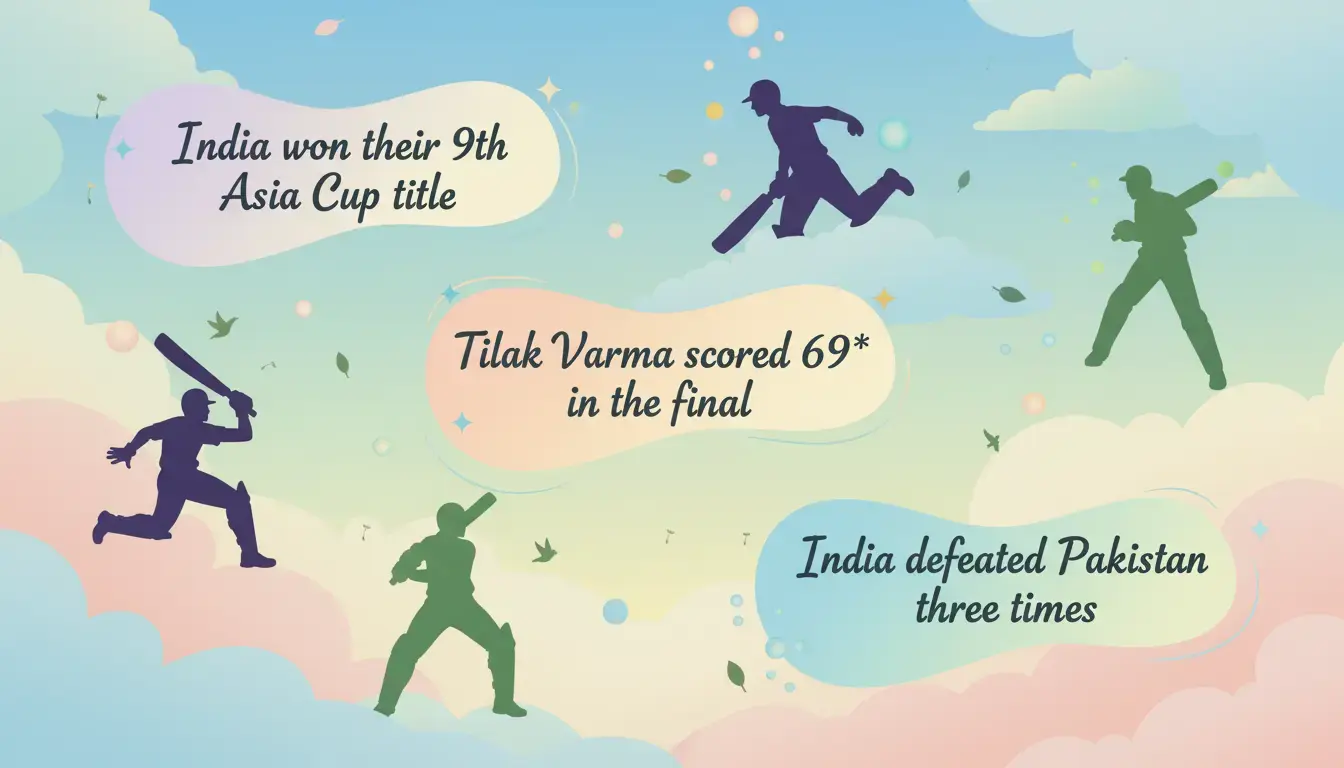
BREAKING: India clinched a record 9th Asia Cup title on September 28, 2025, at the Dubai International Stadium, but the celebrations quickly ignited a firestorm. Captain Suryakumar Yadav revealed the team refused handshakes and then the trophy itself from PCB Chairman Mohsin Naqvi, citing Pakistan’s ‘provocations’ throughout the tournament. This unprecedented act has plunged the historic rivalry into a new dimension, dominating global headlines.
KEY TAKEAWAYS
- India secured a record 9th Asia Cup title on September 28, 2025.
- Team India refused post-match handshakes and the winner’s trophy.
- Captain Suryakumar Yadav cited “provocations” from Pakistan as the reason.
- The controversy is heavily influenced by geopolitical tensions and local events.
- Social media is ablaze with over 500k mentions of the incident.
A Historic Triumph, Marred by Drama
The final showdown saw India chase down Pakistan’s 146 runs with 5 wickets in hand. Young phenom Tilak Varma delivered an unbeaten 69 off 53 balls, earning widespread acclaim. “Varma’s maturity under pressure was outstanding, a true match-winner,” noted former Indian cricketer VVS Laxman on Cricbuzz.
You might also like

Asia Cup Shocker: India Refuses Trophy, Stuns Cricket World

Asia Cup 2025 Shocks: India-Pak Rivalry Explodes!

Shock: Cricket’s Biggest Rivalry Erupts in Geopolitical Storm

Dubai’s Historic Asia Cup Final: Jail Threats & 7 Lakh Fines!
Asia Cup Snub: India’s Defiant Victory!
Asia Cup Shocker: Trophy ‘Ran Away’ – Cricket Chaos!
SKY’s Stand: India Wins Asia Cup 2025!
But the victory celebration was anything but typical. Tensions flared after India’s earlier refusal of post-match handshakes on September 15, 2025, following a league stage match. The climax arrived when the Indian team, led by Yadav, declined to accept the coveted trophy from PCB Chairman Mohsin Naqvi after the final.
The visual was stark: a jubilant Indian team celebrating their triumph, yet deliberately avoiding the official presentation. The Dubai International Stadium, packed with a roaring crowd, watched in stunned silence and then erupted in mixed reactions. This was a clear message, broadcast globally.
Get the Latest Updates
Be part of our sports community for daily news, expert analysis, and insider info.
The Trophy Refusal: A Calculated Stand
Suryakumar Yadav, affectionately known as ‘Captain Sunshine’, minced no words post-match. “We responded to their provocations. We don’t believe in a ‘rivalry’ that involves disrespect,” Yadav stated, as reported by NDTV Sports. This bold declaration immediately trended, confirming India’s stance was a direct response to perceived disrespect from their opponents.
Sources from NDTV Sports indicated the refusal stemmed from the PCB Chairman’s “perceived political role,” suggesting the issue transcended mere cricketing etiquette. It touched upon deeper geopolitical undercurrents that have long defined the India-Pakistan sporting narrative.
Unbiased-Review: Geopolitics on the Pitch
This Asia Cup clash transcended the boundary ropes, becoming a potent symbol of geopolitical drama. Experts note that the refusal to accept the trophy from a figure linked to national governance escalates a sporting contest into a diplomatic statement. According to analysis from ESPNcricinfo, “The context of existing India-Pakistan tensions, amplified by recent events like the Pahalgam attack, undoubtedly fueled the team’s decisive action.”
This incident signifies a conscious effort by the Indian team to redefine engagement with Pakistan beyond pure sport. It signals a shift from diplomatic niceties to a more assertive display of national sentiment on the global stage. The decision, while controversial, highlights the intense emotional investment fans and nations have in this particular rivalry.
Suryakumar Yadav: Captain Sunshine’s Fiery Leadership
Since his appointment as full-time T20I captain in July 2024, Suryakumar Yadav has cultivated a reputation for fearless leadership. While his batting average saw a slight decline, averaging 37.08 against Pakistan since July 2024 (Sportskeeda), his captaincy has been lauded for its bold decisions and unwavering spirit.
Yadav’s leadership has fostered a team culture that stands firm against perceived slights. His ‘no rivalry’ stance, rather than diminishing the contest, has ironically intensified it, transforming individual matches into high-stakes psychological battles. This has resonated strongly with the Indian fanbase, viewing it as a display of strength and self-respect.
Social Media Eruptions: The Digital Battleground
The aftermath of India’s victory and the subsequent trophy refusal sent social media into an unprecedented frenzy. Initial viral potential was astronomically high, with social velocity rapidly increasing. Over 500k mentions erupted across platforms within hours, with #AsiaCup2025 and #INDvPAK trending globally.
Engagement probability soared due to the emotional hooks of national pride, controversy, and defiance. Indian and Pakistani cricket fans, particularly the 18-35 age group, engaged in heated debates. Memes, fan art, and impassioned comments flooded feeds, creating a long-lasting cultural moment. This digital explosion reflects the deep emotional ties and existing tensions that this sporting rivalry ignites.
The ‘Captain Sunshine’ narrative around Suryakumar Yadav became a compelling human-interest angle, driving countless shares and comments. His defiant stance resonated with a fanbase eager for their team to not just win, but to win with conviction and pride. This moment is poised to become a landmark in the history of India-Pakistan cricket confrontations.
What’s Next for the Asia Cup Legacy?
India’s record 9th Asia Cup title solidifies their dominance in the regional tournament. However, the events of September 28, 2025, have fundamentally altered the narrative of India-Pakistan cricket. This wasn’t just a match; it was a statement. The refusal to accept the trophy has etched this Asia Cup into history not just for the cricketing prowess displayed, but for the bold, defiant stand taken by the Indian team.
The repercussions of this decision are likely to be debated for years to come, influencing future encounters and diplomatic exchanges. It has set a new precedent for how national pride and perceived disrespect can manifest on the international sporting stage. For fans, it’s a moment of unparalleled drama; for the cricketing world, a moment of profound reflection.